



We’re often asked, “How can I use your programs with my older student?” Usually, the concern is that a middle or high school student might feel embarrassed by the full-color, hands-on activities included in All About Reading and All About Spelling.
However, with a few modifications, many people have found that our programs work well for teens and even adults!
4 Tips for Using All About Reading and All About Spelling with Older Students
Tip #1 for Teaching Older Students: Begin with the Placement Test
Our programs are not grade-level-specific, so the best way to determine which level your student should start with is to have them take either our Reading Placement Test or our Spelling Placement Test – or both!
In our reading program, it works fine for a student to begin at a higher level if they already have the skills taught at the lower levels. All About Reading contains all the materials you need to fill in any gaps your student may have, so you can start with the review lesson and then take the rest of the program at your student’s pace.
All About Spelling is structured differently; in this program, most students actually begin at Level 1. That’s because All About Spelling is a building-block program in which each level builds on the previous level. Because of the importance of laying a solid foundation, we generally don’t recommend starting higher than Level 2. However, we do encourage parents to customize the lessons for their students, moving quickly through concepts students have already mastered and slowing down when they reach new or difficult concepts.
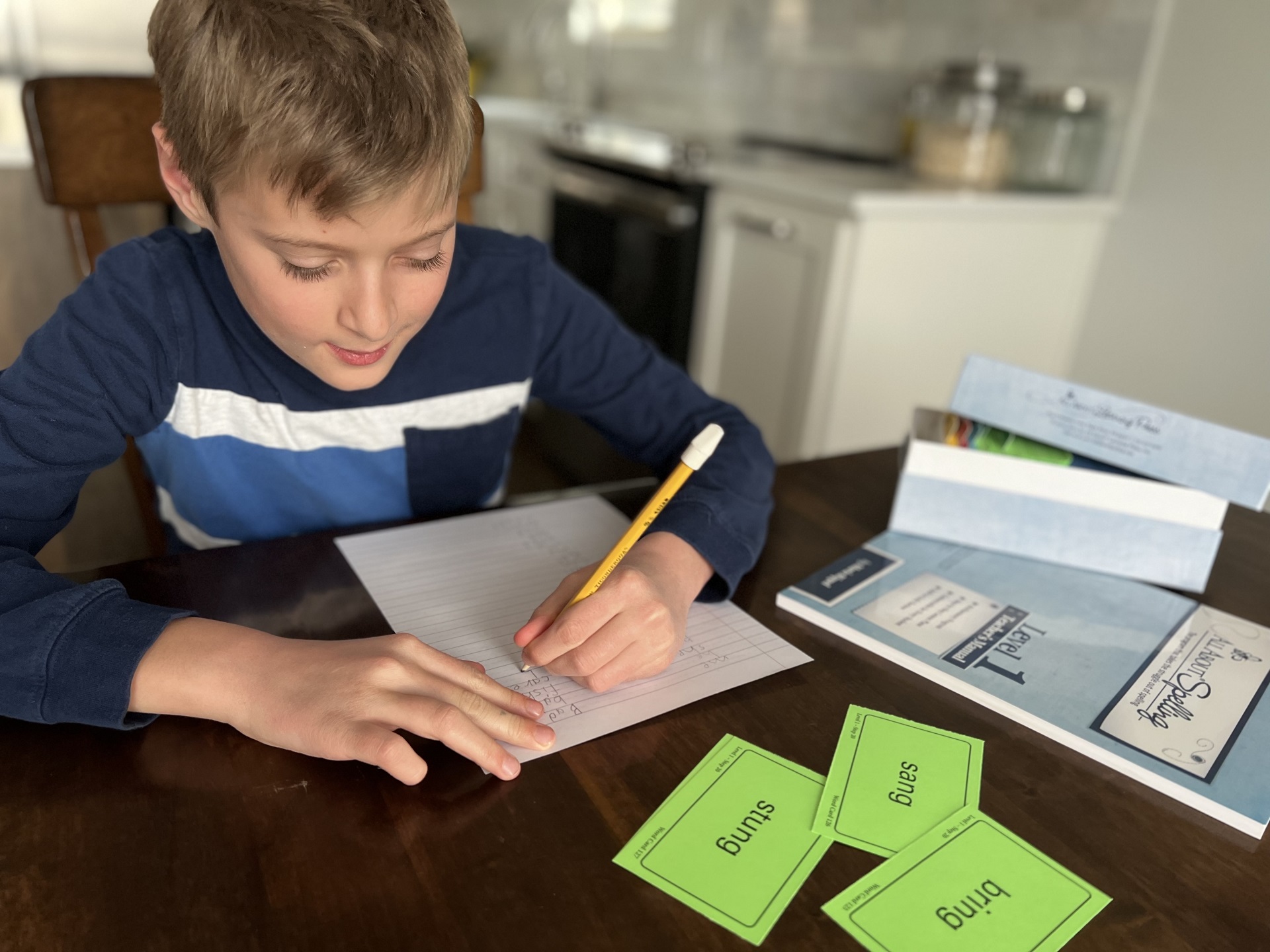
It’s completely normal for your teenage student to initially balk at the idea of beginning our programs at Level 1 or 2, fearing that they’re for first—or second-grade students.
Take the opportunity to explain to your student that our levels have nothing to do with grade levels at all! Our programs are skills-based, and just like you wouldn’t start playing a brand new video game in Level 10 or join a swim team before you learn the basic strokes, reading and spelling also have a specific sequence of skills that must be mastered before moving on to more complex concepts. If they skip ahead, they’ll have gaps in their learning that may impact their reading and spelling success.
For example, even though most older students know how to spell the word “cat,” they often don’t actually know the rule behind why we choose a C instead of a K. Students learn this important foundational rule in All About Spelling Level 1. The same rule that applies to the word “cat” also applies to more complex words such as “Kindergarten” or “concrete.”
Reassure your student that starting at a lower level has nothing to do with grade levels, but that we take a “no gaps” approach to reading and spelling instruction!
Tip #2 for Teaching Older Students: Skip the Activities
In both of our programs, the full-color, hands-on activities are optional. They’re a fun, interactive way for students to practice the concepts they’ve been learning, but if your older student feels embarrassed by them, it’s okay to skip them! You’ll still be able to follow the lessons in the Teacher’s Manual and work through the concepts with your student without missing the heart of the program.
Our programs are robust and include many other types of practice in addition to the activities.
In All About Reading, we recommend fully utilizing the fluency sheets from the activity book and decodable readers to help build students’ skills, fluency, and confidence.
The Color Edition of All About Spelling includes Advanced Application sections targeted at older and/or advanced spellers. Older students will appreciate seeing how the “smaller” words they’re currently working on actually help them learn to spell larger words. There are also dictation words, phrases, and sentences built into the program to help students become proficient spellers.
Both programs include flashcards so you can fully customize your student’s review and give them the targeted instruction they need.
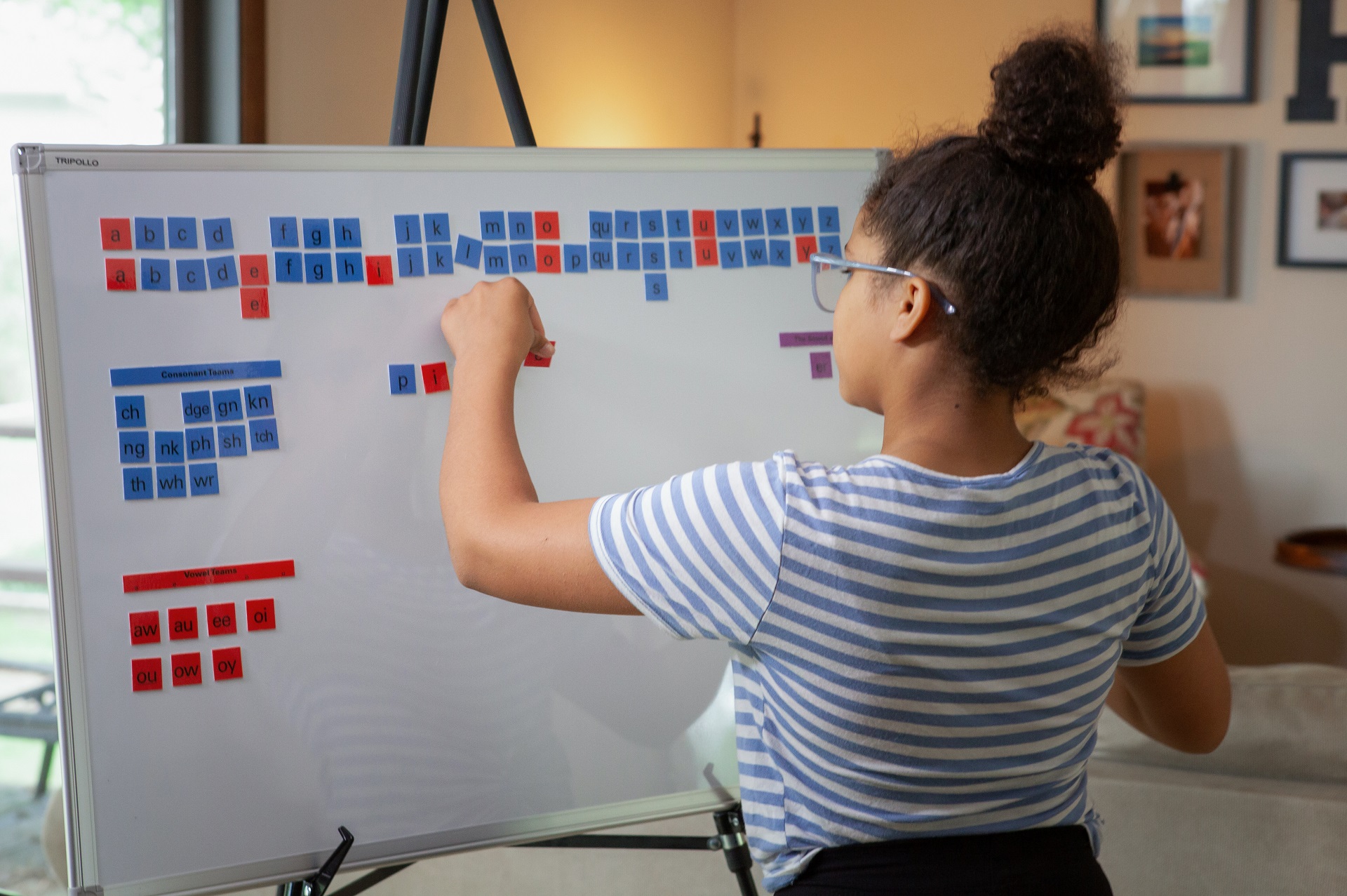
As with the activities, some teenagers may also feel that the physical letter tiles are too “childish” for them. In that case, your teenager might prefer the Letter Tiles for Learning app, which provides the same hands-on letter tiles work using a tablet instead.
Tips #3 for Teaching Older Students: Have Your Student Teach You
One of the simplest, most effective strategies for helping students fully understand a concept is having them teach it back to you.
Studies have shown that students who teach others a concept have “increased metacognitive processing,” “increased use of effective learning strategies,” “increased motivation to learn,” and “increased feelings of competence and autonomy.”1
Known as the “protégé effect,” this strategy is great to incorporate because it doesn’t have to be time-consuming or complicated!
During a lesson, it can be as simple as asking your student, “Why did you choose a K instead of a C in that word? Can you tell me more about how we know when to choose a C or K?” or “How did you know where to divide the word “cabin” into syllables?”
Taking this strategy one step further, you could plan to have your student teach a whole lesson back to you. Let them know that you’re going to be the student and they’re going to teach you. Then, have them teach you using the Rule Cards, Letter Tiles, and dictation phrases and sentences. Ask questions as they teach, and even make mistakes in your own spelling to give them a chance to correct you.
The more interactive you make it, the more your student will engage with the material and internalize it!
Tip #4 for Teaching Older Students: Encourage, Encourage, Encourage!
Struggling learners often have to work much harder to master the same skills that other students learn easily. Older students, especially, may feel discouraged by how challenging reading and/or spelling is to them, which is why they need a lot of encouragement! Giving your student meaningful feedback about their progress encourages them and shows them you’re noticing the effort they’ve invested.
Swap out phrases like “good job” and instead, try some of the following:
- “I like the way you chose CK instead of a K in the word “tick.” What made you spell it that way?”
- “This is such a tricky concept, and I love the way you just keep working at it!”
- “You’re right! Normally, an open syllable would make the vowel sound long. Remember the Never-Ending Rule? It says that English words never end in an “i.” So, keeping that in mind, how do we spell the word sky?”
Giving students feedback that is specific, positive, and constructive tells them exactly what they’re doing right and where they need to improve. It also guides and encourages students, building their confidence and motivating them to keep working hard.
All About Reading and All About Spelling are for Older Students, too!
We know that, at first glance, older students may feel that All About Reading and All About Spelling are designed for “little kids,” but by employing these strategies, many people have found the programs work well for students of all ages!
Need Free Teaching Resources?
We want to equip you for your homeschooling years as best we can. That’s why we’ve created this extensive collection of resources for teaching at home. Check it out here!
_________________________
1“The Protégé Effect: How You Can Learn by Teaching Others.” Effectiviology.com.
(https://effectiviology.com/protege-effect-learn-by-teaching/#How_to_use_the_protege_effect).


Comments
No comments yet. Our team reads and replies to every one.