


Does your child dislike reading? Would your child rather do chores than read a book? Does your child avoid reading whenever possible? When it’s time for reading lessons, are there tears or grumpiness involved?
Children who dislike reading are usually struggling readers. Just as nonathletic people tend to avoid exercise, struggling readers tend to avoid books and everything else related to reading.
The Downward Spiral
Reading difficulties can be caused by many factors, including vision problems, learning differences such as dyslexia, or the lack of a solid phonics base. Whatever the cause, when a child has reading problems, it sets in motion a terrible downward spiral.
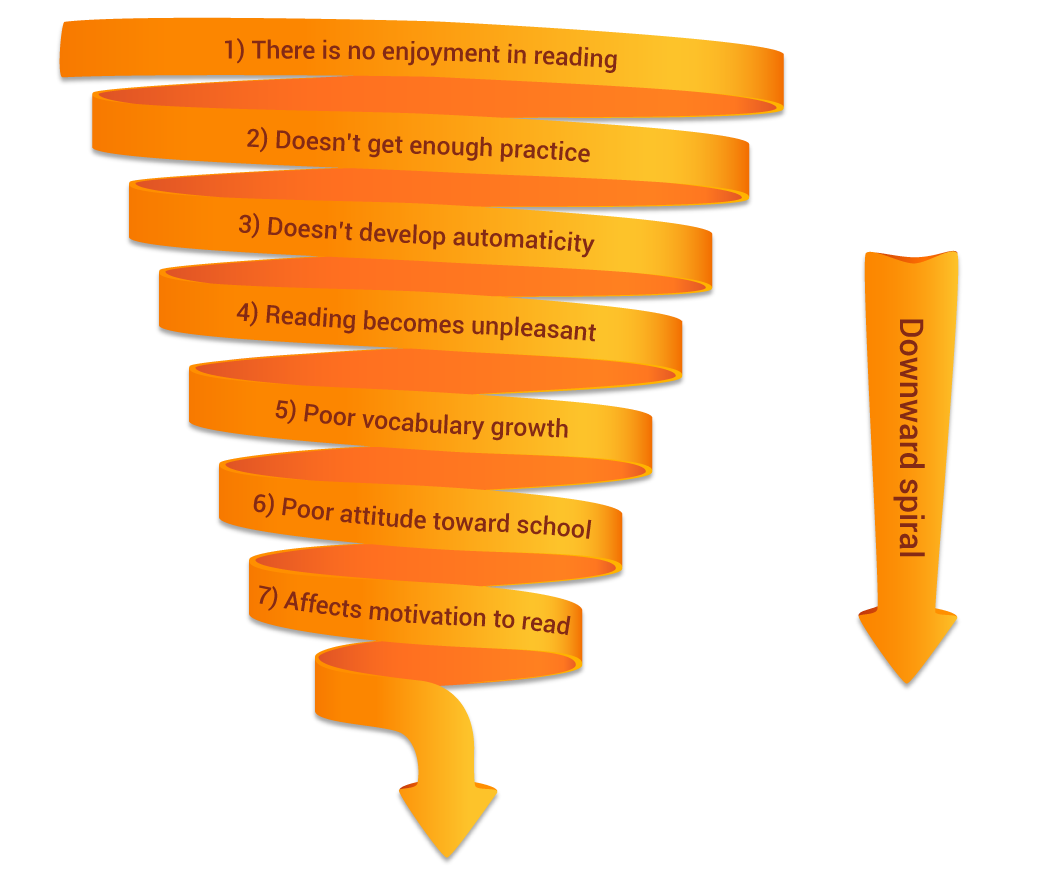
It makes sense: when your child dislikes reading, he doesn’t get enough practice. Without practice, he doesn’t develop automaticity, and reading becomes hard—which leads to even less practice.
The Upward Spiral
Conversely, when reading comes easily to a child, it sets in motion a wonderful upward spiral.
When reading is easy for a child, he usually likes to read – and because it’s easy for him, he reads more. As a result, he develops automaticity, reading becomes even more pleasant, and he has excellent vocabulary growth. The upward spiral continues.
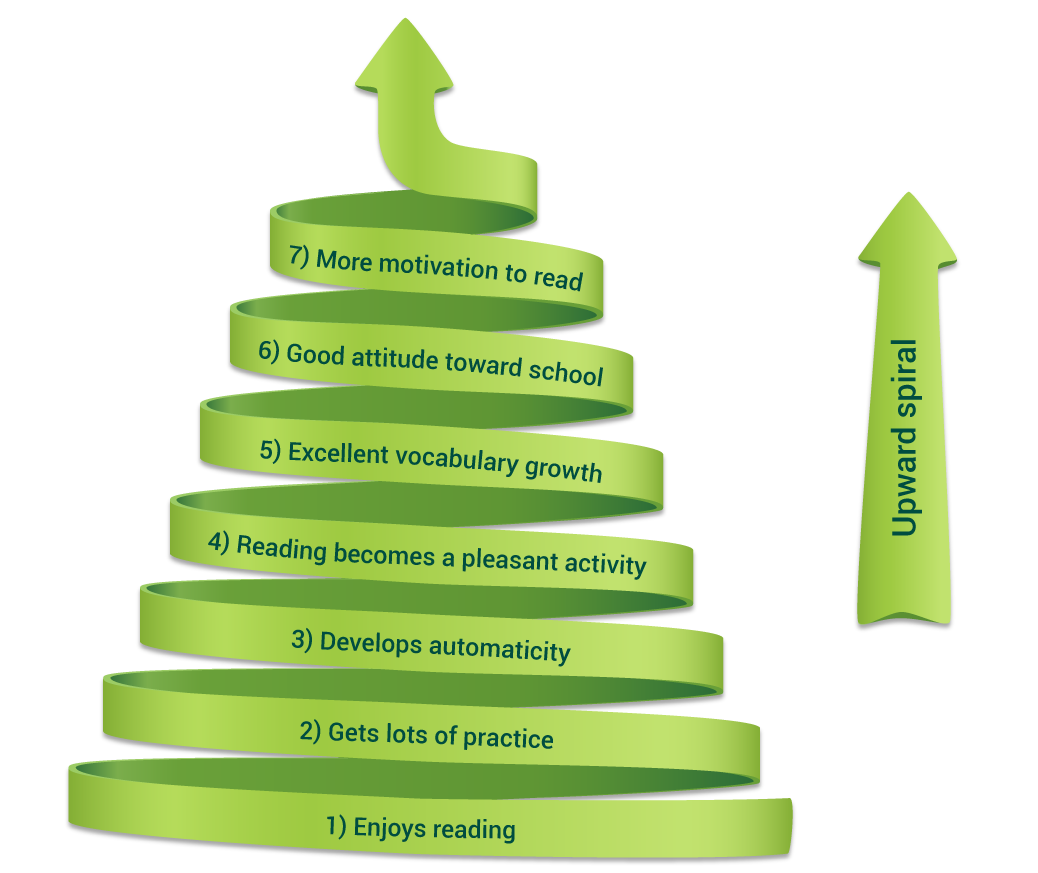
After several years, the gap between children who are on the “downward spiral” and children who are on the “upward spiral” can become quite large.
This Is the Matthew Effect
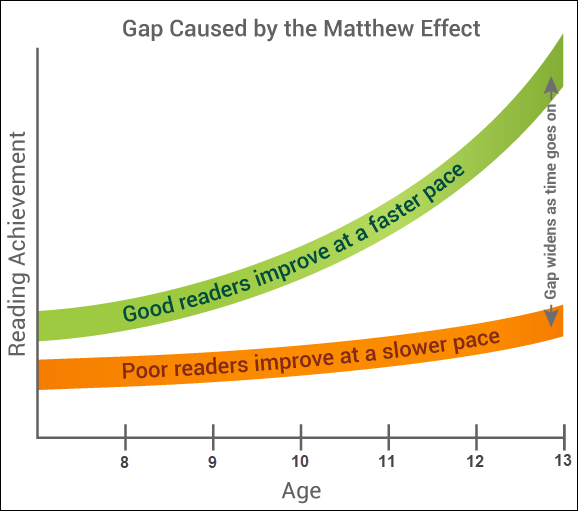
As it relates to reading, the Matthew effect refers to the idea that good readers read more, causing them to become even better readers. Conversely, poor readers shy away from reading, which has a negative impact on their growth in reading ability. This causes the gap between good readers and poor readers to widen.
The Matthew effect comes from a parable told by Jesus and recorded in Matthew 25:29. The idea behind the parable eventually worked its way into the maxim, “The rich get richer and the poor get poorer.” The term Matthew effect was first used in the scientific field to explain how, when two scientists independently do the same work, the more prominent scientist often receives the credit for work done by the lesser known scientist. Later, cognitive science researcher Keith Stanovich1 applied the term Matthew effect to reading when he observed the effect that poor reading skills can have on all areas of a student’s academic life.
Children who are good readers experience more success, and they are encouraged by that success to read more. As they become even more successful at reading, their vocabulary and comprehension grows, which often leads to greater success in all academic areas. On the other hand, readers who struggle at decoding are less likely to want to pick up a book. They get much less practice and fall behind – often way behind – their peers. They fall behind not only in reading and spelling, but also in other content areas such as history and science.
This chart shows how the gap between good readers and poor readers widens as time goes on.
How to Help Your Struggling Reader
The Matthew effect has such a strong negative impact on poor readers that the sooner you can intervene, the better. There are three ways you can help your reluctant reader, starting now:
- Teach your child how to read using an explicit phonics method such as All About Reading. In Anna Gillingham’s words, “go as fast as you can, but as slowly as you must.”
- Read aloud to your child every day. Hearing good literature will help your child develop vocabulary and comprehension, even while he is learning to read on his own.
- Encourage reading outside of school. Help your student select books that are at the right reading level for him and contain topics that interest him.
Above all, don’t get discouraged and don’t give up. Reading affects all other academic areas, so it is important to get your child the help he needs. If your child is struggling, please know that we are here to help.
Do you have a child who avoids reading? Let us know in the comments below.

1 Stanovich, Keith E. (1986). Matthew effects in reading: Some consequences of individual differences in the acquisition of literacy. Reading Research Quarterly, 22, 360-407.


Comments
No comments yet. Our team reads and replies to every one.