


Learning how to spell words that don’t follow the rules can be … well boring. And we can’t have that!
In All About Spelling, we’ve labeled unruly words like said, who, and been as “Rule Breakers,” and we’ve created several motivating ways to make learning to spell these words a bit easier … and a lot more fun!
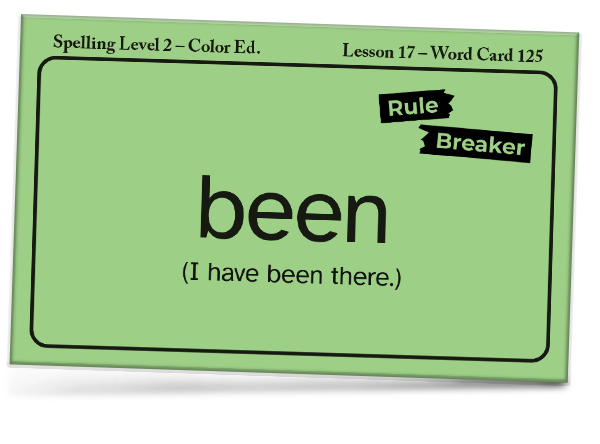
When your student encounters a Rule Breaker in All About Spelling (or the real world!), just reach for one of these activities and let the fun begin!
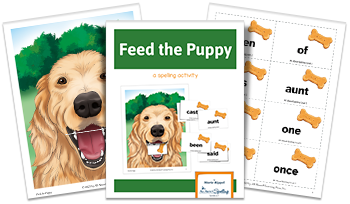
Feed the Rule Breaker to the puppy!
When you encounter a word that breaks the rules, this adorable puppy is ready to help you deal with the misbehaving word! Download our Feed the Puppy activity.
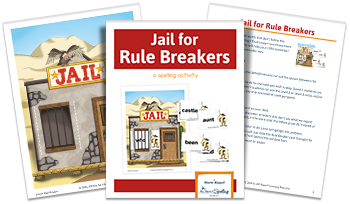
Throw the Rule Breaker in jail!
A short time out just might help control those Rule Breakers. Download our Jail for Rule Breakers activity.
Have an older student? Older kids like these treatments of unruly words just as much as younger ones do, so pick your favorite and see how those tricky words stick in their minds!
Two More Ways to Handle Rule Breakers
-
Writing Intensive
-
Look at the Word Card and then look at an empty spot on the table.
-
Picture the word on the table and spell the word aloud three times.
-
Using a finger, “write” the word on the table three times in VERY BIG LETTERS.
-
Spell the word on paper three times.
In the space of a minute or two, your student will have practiced the word nine times.
-
-
Tactile Practice
In this exercise, your student “writes” the Rule Breaker on a tactile surface, using his pointer finger instead of a pencil. Some surfaces to consider include:
-
Sand in a shoe box lid
-
“Feely” fabrics such as burlap, velvet, or corduroy
-
Plush carpet square
-
We treat Rule Breakers differently from other words to help kids learn them soon after they are introduced. Two effective ways to burn something into memory are frequency (repeated review) and intensity (different and surprising treatment), so keep these ideas in mind as you handle the Rule Breakers. Doing whatever it takes to enable your student to spell these words correctly right from the start will prevent problems later.
Most Words Do Follow the Rules
Thankfully, the vast majority of spelling words do follow consistent patterns. And when kids first start out, we are careful to work only with words that follow the rules. This helps kids internalize the fact that there are reliable rules and that they can make sense of spelling. They discover that they don’t need to resort to guessing or memorizing strings of letters.
So before introducing the first Rule Breakers, make sure your student can spell hundreds of “law-abiding” words. Then—and only then—begin teaching the unruly ones.
Which spelling words cause your student the most difficulty? Let me know in the comments, and then download my free e-book called “Six Ways We Make Spelling Easy” below!


Comments
No comments yet. Our team reads and replies to every one.