


Do your children have a hard time sitting still during read-alouds? Many kids do. They can sit still for two minutes, and then—ZOOM!—they are off. There are so many interesting things to do at any given time. There are block towers to construct, cool insects to check out, computer games to play, and physical feats to perform. Sometimes all at once! Life is great!
Good listening comprehension spills over into good reading comprehension, so you definitely want to figure out how to make read-aloud time doable for you and your child.
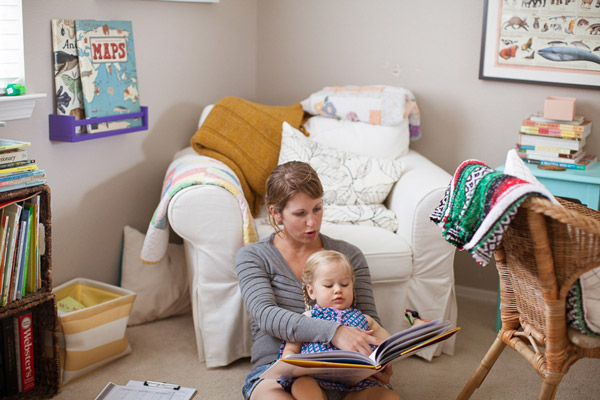
Reading Aloud with Active Children
Reading aloud for twenty minutes a day is important. In fact, read-aloud time is so important that it is built right into the All About Reading program, with a prompt in every lesson to remind you.
10 Tips for Reading Aloud to Kids Who Can’t Sit Still
Here are 10 ideas to try if you have an active child.
- Read after physical activity. Make sure that he gets plenty of physical activity—riding a bike, playing tag, rolling down hills, climbing the jungle gym—kids are designed to MOVE, so take care of that need before expecting them to sit still for a book.
- Consider the timing of your read-alouds. Some children have an extra dose of energy right after breakfast, so this wouldn’t be the ideal time to ask them to focus on a storybook. Midafternoon or bedtime may be a better choice.
- Keep your children engaged with interactive books. Let them lift the flaps, pull the tabs, count the cats. Here’s a list of some really good interactive books.
Read during lunch or snack time.
Listen to audio books in the car.
Read to your child while he’s in the bathtub.
Try reading books that appeal to your child’s unique interests.
Let your child sit on a Move-N-Sit cushion.- Eliminate avoidable distractions such as cell phones, the television, or computer games being played in the background.
- Set a timer for read-alouds. This way your child knows that there will be a definite end to the sitting-down-and-listening part of his day. He knows that the timer will go off, reminding you that book time is over and he can propel off like a rocket to his next adventure.
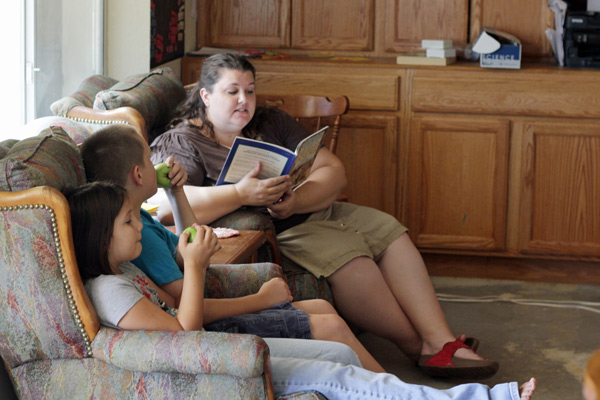
One Final (Slightly Controversial) Tip
I didn’t believe this tip until I worked with some serious wigglers myself.
Some children need to be actively doing something with their hands in order to concentrate.
This can be as simple as holding a toy car and spinning the wheels or as involved as building a jigsaw puzzle or coloring with crayons.
Some children are so overwhelmed by the act of sitting quietly and concentrating that they simply cannot stay still, making it nearly impossible for them to listen.

But when a child is allowed to quietly play with something during reading time, he can expend physical energy in a nonintrusive way and focus on listening to the story. Of course, if the quiet play escalates into a full-fledged game, then attention will wander and any positive listening benefits will be lost.
Here’s the key: let the child stay engaged in a calming activity during read-aloud time and help him learn the boundaries of what constitutes a “quiet” activity (this definition can vary family to family).
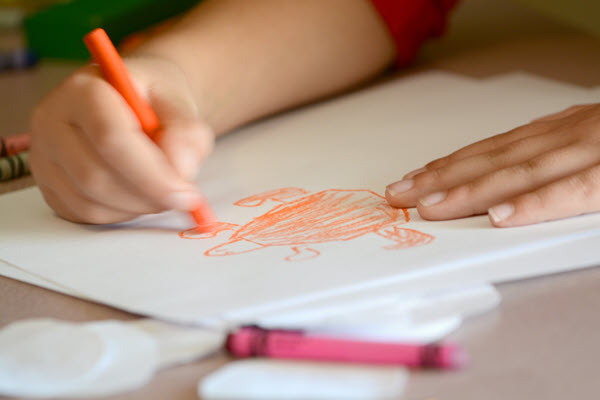
Here are a few ideas for keeping hands busy:
- Thinking Putty
- Playdough
- modeling wax
- Lego® bricks
- doodling
- lacing cards
- coloring
- knitting
- building blocks
- beading
- making friendship bracelets
Experiment to see what works in your household. Some children are helped by keeping their hands busy, while others are distracted by it. Some children are able to focus better in the morning, while others have a calm, receptive mind before bedtime.
Making read-aloud time work for your family may require a bit of trial and error. If read-aloud time isn’t working right now, I encourage you to try some of the ideas shared above. Don’t give up! It is critical to develop your child’s listening comprehension through read-alouds, so experiment and be open to trying new things.
Is your child a wiggler? Do you have a read-aloud tip to share?
Read-Aloud Tips Recommended by Our Readers:
- Put a pile of clean laundry in the middle of the floor and have the kids fold while mom reads. (Recommended by Molly M. via Facebook)
- I read aloud at the deserted park near our house, while he moves. It’s how he learns best! (Recommended by @nottheformerthings via Instagram)
- I have my wiggler brush my hair while I read aloud to him. He sits on the couch and I sit on the floor. That way he can see over my shoulder to any pictures. His hands stay busy and he listens! (Recommended by Gina via blog comment)
- I like to have the boys act out the stories that we are reading when they are in a super wriggly mood. Sometimes we make up hand signals they do every time they hear a certain word. (Recommended by Rachel via blog comment)
- I put together a box of “hand fidgets” for him – things he can squish around in his hands while he’s listening but that won’t distract him from his lesson. (Recommended by Paula via blog comment)
- When my daughter has the wiggles, she holds a toy car in her hands. Rolling the wheels with her fingers seems to help keep her listening without creating any distractions. (Recommended by Liz T. via blog comment)
- My children all like to do handicrafts while we read…embroidery, crochet “chains”, and drawing have all been wonderful during read-aloud. (Recommended by Amara K. via blog comment)
- Color, draw, Perler beads, Play-Doh, Rainbow Loom, and crocheting have all worked well. (Recommended by Carlyn L. via Facebook)
- Puzzles are a favorite at our house right now. (Recommended by @ourlittleschoolhouse via Instagram)
Photo credit: Rachel Neumann and Shawna Wingert


Comments
No comments yet. Our team reads and replies to every one.