


Do you suspect that your child has a reading problem? If so, you’re not alone.
Lots of parents come to us looking for answers to their children’s reading problems. My own son had struggles with reading when he was young, so not only do I have the help you need, I also understand firsthand what you’re going through.
Let’s get some answers for you!
As you read through this article, trust your instincts. If you think your child is struggling with reading, it is likely that he is. This list can help you be sure.
What Are the Signs of a Reading Problem?
A child with a reading problem may display some of the issues listed below.
- Sounds out every word on the page, even if he has already read them.
- Doesn’t know the sounds of the letters.
- Oral reading is choppy rather than fluent and smooth.
- Reads words in the wrong order.
- May recognize a word on one page, but not on the next page.
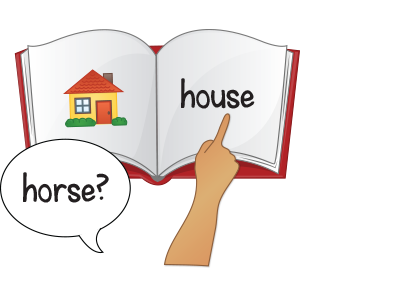
- Substitutes similar-looking words, such as house for horse.
- Guesses at words instead of sounding them out.
- Lacks the skill to sound out unfamiliar words.
- Ignores punctuation when reading.
- Loses place on the page, skips lines, or rereads lines.
- Inserts extra letters in a word when reading. For example, may read tail as trail. The misread word often has the same beginning and ending letter.
- Makes up part of the story based on the illustrations or context clues instead of reading the actual words on the page.
- Substitutes words with similar meanings when reading stories. For example, may read said instead of shouted.
- Skips small words such as a, the, to, of, were, and from.
- Displays poor reading comprehension.
- Has a difficult time reading single words on a flashcard.
- Resists reading. It’s a natural tendency for children to avoid what they aren’t skilled at.

What Causes Reading Problems?
If you recognize your child in any of the signs listed above, don’t despair! Reading problems can stem from a number of different causes, and most of these can be overcome.
Kids with auditory processing disorder often have problems learning to read. Though a child with APD faces many academic challenges, you can help him learn to read. All About Reading uses an instructional approach that is exactly what a child with APD needs!
Dyslexia is a common reading and spelling disability. Approximately 10% of students are affected by dyslexia. Symptoms vary from person to person. If you suspect dyslexia, download our Symptoms of Dyslexia checklist.
Vision problems can cause reading issues. Work with your pediatric ophthalmologist to rule out vision problems such as far-sightedness or convergence insufficiency disorder.
Other causes of reading problems include autism and poor working memory. Attention-deficit hyperactivity disorder (ADHD) can also cause reading problems because it is difficult for the child to stay focused on the task at hand.
Is It Possible that My Child Doesn’t Have a Reading Problem?
Yes, it is! Sometimes a child is labeled with a reading problem, but the real issue is that he hasn’t been taught in the way he can learn. We can’t expect a child to read if he has gaps in his reading instruction or limited experience. While some kids seem to naturally pick up reading with very little instruction, for many kids, reading success requires direct systematic instruction such as that found in All About Reading.
Other times, too much is expected from very young children. Some children just aren’t ready to read yet, and in those cases, it’s helpful to do pre-reading activities to prepare them, such as those found in our Pre-reading program.
Learning to read takes time—and in many cases, repetition and review—before a child begins to experience success. A child might need to see a word 30 times before he can automatically recognize it by sight. If your child hasn’t met a word that many times yet, don’t be alarmed if he needs to sound it out.
Learning to read can be hard work for kids. If your child has a low frustration tolerance, it can appear that he may have a reading problem even if he doesn’t.
How Can I Help My Child?
If your child has a reading problem, the most important thing to remember is that you CAN help him. And we can help you! The resources below are all designed to provide parents with the tools they need to teach their children to read and spell, even children with special needs.
Resources for Children with Reading Problems
All About Reading is a fun and engaging program that starts with essential pre-reading skills and continues on to teach all five key components of reading. This Orton-Gillingham program contains everything your student needs to become a fluent reader for life!
The Power of the Orton-Gillingham Approach: Discover the foundational elements of this powerful approach and how it forms the backbone of the All About Reading and All About Spelling programs.
10 Tips for Reaching Your Struggling Learner: There are very specific teaching methods that you can use to help your struggling learner succeed. One of the most important things you will want to do is to use curricula and teaching strategies that can be tailored to his needs.
How to Solve Letter Reversal Problems: Does your child sometimes confuse certain letters, like b and d or n and u? Beginning readers and dyslexic children may struggle to differentiate between letters that have similar shapes, and issues with letter reversals can have a direct impact on reading, writing, and spelling.
Learning Ally is a non-profit organization committed to helping dyslexic, blind, and visually impaired students thrive. Audiobooks help kids experience the many benefits of consuming text, but without the struggle of reading.
Testimonies from Real Moms
Failure Is Not an Option: In this video, author Marie Rippel shares with you the very personal story of how she came to develop the All About Reading and All About Spelling programs.
All About Reading and Dyslexia: Trained Orton-Gillingham instructor and mom Marianne tells her story of teaching seven children with dyslexia.
How All About Spelling Saved My Dyslexic Son: Heather began homeschooling her dyslexic son after exhausting all other options. That’s when she discovered All About Spelling. This blog post shares how her son’s learning was transformed with AAS.
Contact Us If You Need Help
If you have questions about how to help your struggling reader, please feel free to call or email us.
Does your child show signs of a reading problem?


Comments
No comments yet. Our team reads and replies to every one.