


When you’re first beginning your homeschooling journey, it can feel overwhelming. It’s a big task with a weighty responsibility and one we all endeavor to do well. Many of us doubt ourselves, wonder if we’re doing the right thing, and question if we’ve chosen the right curriculum or the right educational philosophy. Many of us are also first-generation homeschoolers, so we’re blazing a new trail in our families, which can be really exciting, but also really daunting.
Thankfully, with homeschooling on the rise, we no longer have to do it alone! One of the things that I found so encouraging when I was just starting out was to hear what other parents wished they had known when they first started homeschooling.
So wherever you are in your own homeschooling journey, whether you’re just starting out or you’ve been on this journey for a while, Robin and I (Cassandra) wanted to share a few things that we wish we had known when we first started.
3 THINGS ROBIN WISHES SHE HAD KNOWN WHEN SHE STARTED HOMESCHOOLING
-
Consistency is the key to success.
When I was first starting to homeschool my kindergartener and preschooler, I was so focused on the right curriculum, the right educational philosophy, and the right routine. Although all those things are important, I wish I’d understood in those early years that none of them would have a positive impact on my children unless I applied them consistently.
I could have had the best curriculum available, but if I had used it only occasionally, it would have been worthless. Progress is made, not in perfect lessons done sporadically, but in good lessons done consistently. It took me a while to learn how essential it was to make school a priority at least four days a week.
-
It’s vital to take care of yourself.
As parents, we can get so focused on what is best for our children that we can forget what is best for ourselves. I wish I had understood the importance of developing healthy habits, such as regular exercise, eating well, and getting enough sleep. I struggled to carve out time to care for myself when I had two children in elementary school, as well as a preschooler, a toddler, and an infant. However, looking back, I know I could have made more effort.
Research shows that even small improvements in diet, exercise, and sleep increase energy and boost the immune response. They also reduce stress and even improve mental health. And, of course, we know that they promote long-term health by reducing the risk of many chronic diseases.
All this benefits our children, too. Who wouldn’t want a parent that is energetic, healthy, and well-rested? I know I’m a kinder, better teacher when I take care of myself.
-
Fostering the love of learning is as valuable as the learning itself.
Most will agree that children need to learn to read, spell, write, figure, and be well educated. However, after reviewing the letter L for the hundredth time in a week, I grew frustrated and short with my kids. With my frustration, I showed them that learning is a negative experience and something to be disliked. And you probably know how unpleasant it can be to get children to do something they dislike!
Learning to enjoy the process of learning has a long-reaching impact, as well. Children who dislike their school day won’t spend any of their free time reading about local lizard species or computer programming. They will complain about a trip to a museum or leave the room when a documentary comes on. Children who dislike learning will lose out on so much.
However, it’s not hard to foster a love of learning. End lessons before your child grows tired or frustrated. Make learning multisensory, appealing, and as fun as possible. Be the teacher your child needs.
3 THINGS I WISH I HAD KNOWN WHEN I STARTED HOMESCHOOLING
-
Homeschooling isn’t simply “school at home.”
When I first started preschool at home with my oldest son, I had only been out of the public school classroom for a few months. All I really knew was the public school world, with its standards, expectations, and resources. So I did what I knew how to do. I printed off my state’s standards, bought resources I was familiar with, and started teaching my son the alphabet with enthusiasm. It didn’t take long for me to realize that he was still pretty young and maybe not quite ready for the curriculum I had chosen.
Soon after, a good friend of mine (who had been homeschooled growing up and was several years ahead of me in homeschooling her own kids) handed me the book, For the Children’s Sake. In it, I encountered an entirely new approach to education, which started me on a journey of unlearning what I had been taught as a public educator and relearning an entirely new philosophy of education.
I discovered that home education could be beautiful, rich, wide, and varied and include subjects I’d never even heard of (Swedish Drill was brand new to my vocabulary)! It was during my son’s Kindergarten year when I heard someone say that home education is as much about your home life as it is about the education your kids are getting.
And they were right!
Slowly, our home life began to reflect the values and philosophy we’d begun to develop for our homeschool. We chose good books, listened to classical music as the soundtrack to our days, and set the table for tea time. It has slowly evolved over the years, and now, home education hardly resembles the traditional school model in which I was trained. I wish I had known how deeply transformative homeschooling would be for our entire family because I think that would have squashed any doubts I might have had about starting in the first place.
-
Each child will progress at his or her own pace.
As a former special education teacher, I knew this. Each child is unique and has different strengths, weaknesses, and interests, so it’s only natural that no two children will progress at the exact same pace. But still, I held onto a false notion that my kiddos would learn things in more or less the same way and at the same rate.
Discovering that my oldest has dyslexia radically changed this idea for me, though, and I realized that even though I knew that each child learns at his or her own pace, I was still holding onto arbitrary expectations. It took me a while to readjust those expectations and become comfortable with the fact that learning to read and spell would take longer for my son. He needed to move at his own pace.
Even without learning differences in the mix, each child needs the time, space, and encouragement to learn at his or her own pace, even if it looks completely different than what we had initially expected!
There’s a quote from Anna Gillingham that says, “Go as fast as you can, but as slow as you must” (https://www.orton-gillingham.com/orton-gillingham/). And that, to me, sums up the best way to evaluate a child’s pace and progress. Let each child set their own pace. It’s okay to encourage them and push them to do their best work, but realize that some skills are going to take some students longer to master. And that’s okay!
-
In homeschooling my children, I’m getting a whole new education, too!
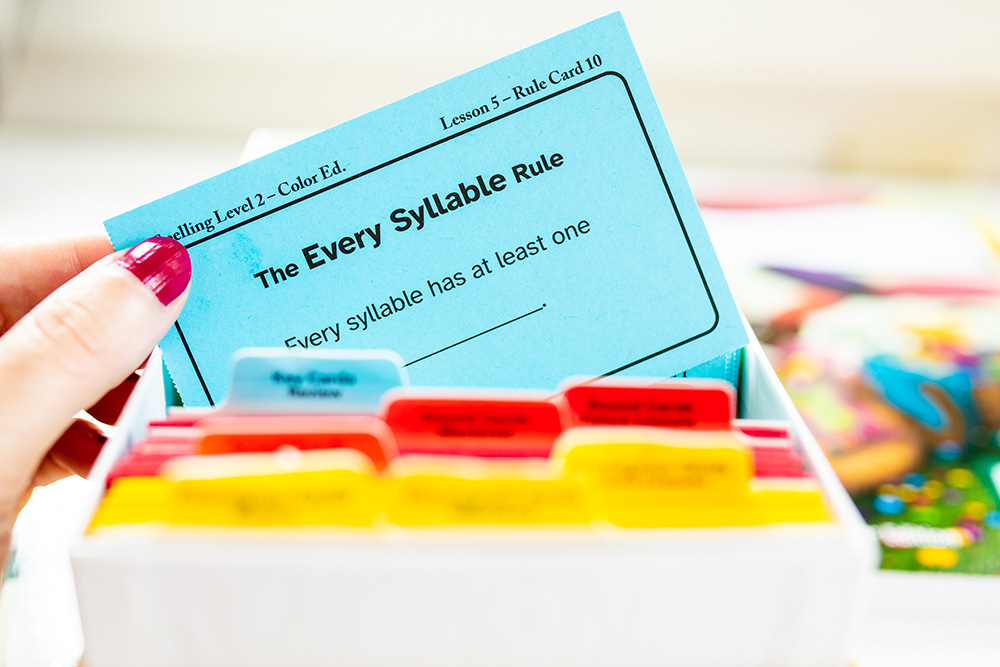
In talking to many other homeschool parents, doubt is something that frequently pops up. We wonder if we’re good enough, smart enough, patient enough, or know enough to homeschool our kids. The truth is, though, no one knows everything!
Homeschooling has changed my perspective. Instead of feeling like I need to know everything so I can impart it to my children, I realize that I get to learn alongside them. There are holes and gaps in the education I received growing up, but instead of those gaps making me feel insecure, I’ve realized that homeschooling gives me the chance to not only fill in those gaps but to explore and learn about topics that were never even covered in school. Homeschooling is not only a feast of ideas for my children, but it’s a rich buffet for me, too!
As you start out homeschooling, it’s natural to doubt yourself or wonder if it’s the right choice. However, I hope you feel encouraged that you can do this, too. We’re all learning as we go and sharing as we learn, and the homeschooling community is full of parents who are ready to cheer you on!
We’d love to hear from you in the comments! If you’re a new homeschooling parent, what’s your biggest question or concern? If you’re an experienced homeschooling parent, what would you add to this list of things you wish you’d known when you started homeschooling?
Need more support?
We want to equip you for your homeschooling years as best we can. That’s why we’ve created this extensive collection of resources for teaching at home.
Also, check out our All About Reading & All About Spelling Support Group on Facebook, or contact us, and we’ll be happy to help you with any questions you may have about your homeschool journey!
Need Free Teaching Resources?
We want to equip you for your homeschooling years as best we can. That’s why we’ve created this extensive collection of resources for teaching at home. Check it out here!
_________________________
Cassandra Ginter is a former high school special education and English as a Second Language teacher turned homeschooling mom of three. She’s been a blogger and general word nerd for over 15 years, and has been privileged to work for All About Learning Press since early 2023.
_________________________
Robin E. Williams has homeschooled five children, counseled others on homeschooling for over 15 years, and has worked in customer service for All About Learning Press for a decade.


Comments
No comments yet. Our team reads and replies to every one.