


Are you teaching a child with autism how to read or spell? If so, you need this post!
Children with autism often have difficulty learning to read and spell using standard methods because their brains process information in unique ways.
For example, some children with autism think in pictures instead of words. Many have problems recalling strings of words or multi-step instructions. And differentiating between certain sounds can be difficult for those with autism, which can make learning to read especially difficult.
Fortunately, our step-by-step, multisensory techniques actively engage children in the learning process and make learning to read and spell much easier.
6 Tips for Teaching Kids with Autism
Following are six important tips for teaching children with autism how to read and spell.
-
Provide Concrete Examples
Children with autism often have difficulty processing abstract ideas. Color-coded letter tiles provide concrete examples of reading and spelling concepts.
Also, autism can make it impossible to process excessive verbal input. Demonstrating blending and segmenting using letter tiles allows the child to understand the process without being overwhelmed with long verbal explanations.
-
Use Direct Instruction
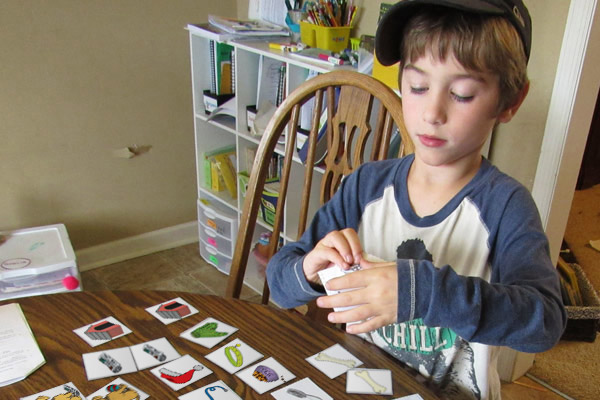
With direct instruction, lessons are carefully sequenced and explicit. The student is told exactly what he needs to know. Each reading and spelling lesson should include three simple steps:
- A review of what was learned the day before
- New teaching of a single concept
- A short practice of the new teaching
-
Focus on Incremental Lessons
Break every skill down into its most basic steps and then teach the lessons in a logical order, carrying your child from one concept or skill to the next. Each step should build on steps your child has already mastered, ensuring that there are no gaps.
-
Teach One New Concept at a Time
When teaching children their letters, start with the phonograms and teach them the ones that are easiest to learn and that they can put to immediate use, like M, S, P, and A. Teaching one concept at a time respects the child’s funnel and helps learning stick. It also helps keep lessons short.
-
Use Multisensory Techniques
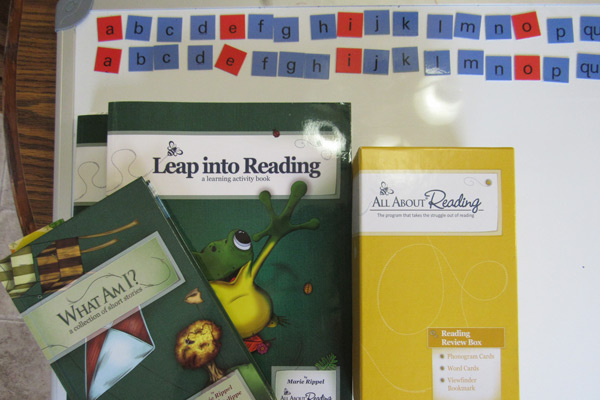
Teach every lesson using sight, sound, and touch. For example, using moveable letters engages both the kinesthetic and visual pathways to the brain, and saying the sounds aloud engages the auditory pathway.
You can also have your child form letters in salt or rice, or trace the shape of the letters on the textured surface of his choice, such as velvet or sandpaper. This is especially helpful if your child has difficulty with fine motor control and needs simple and repeated activities to help develop this skill.
-
Pay Attention to Reading Comprehension
Many children with autism learn how to decode words quickly and easily, but they have difficulty with comprehension. If your child is a literal thinker, it may be difficult for her to understand concepts like words with multiple meanings or making predictions or understanding character motivation.
To help, work on developing listening comprehension using the tips in 4 Great Ways to Build Listening Comprehension. This post on How to Teach Reading Comprehension also has great information on how to help your child understand what she is reading.
-
Place Your Student According to Ability, Not Grade Level
Set your child up for success with a mastery-based approach to learning. This approach lets you to meet your child right where he is and allows you to teach at your child’s pace instead of at a rigid pace set by a curriculum. Some children with autism learn in huge leaps—learning many literacy concepts almost all at once—while others need time to fully digest a lesson before progressing. By using a mastery-based approach, your child can move as quickly or as slowly as he need to.
-
Reward Your Child’s Progress

It is important to make the lessons mastery-based and to include a visual way for your child to mark her progress, such as a chart where she can paste stars for each lesson learned.
And don’t forget to use words of encouragement every step of the way. Simple encouragement like “Good job!” or “You did great!” or “Excellent!” goes a long way toward building confidence and self-esteem in children, motivating them to keep learning.
Notes from Parents of Children with Autism
“When our twins were diagnosed with autism, we knew that we needed to play to their strengths in looking for curriculum. I quickly discovered that they do better when they are naturally motivated to engage. All About Reading and All About Spelling do just that, and the programs scream “autism-friendly.” This is wonderful curriculum!” – Cindy, mother of two children with autism, and blogger at My Life as a Rinnagade
“My mildly autistic son struggled severely in school. Watching him flounder was breaking my heart, so I pulled him out to home school. We were recommended to All About Reading and All About Spelling by a random acquaintance. I love your products! We have done All About Reading Levels 1-3. The stories are so engaging! My son always asks to do reading first because he knows he will be reading a great story or doing a fun activity. THANK YOU for this amazing product!” – Jessica
“My 13-year-old nonverbal, autistic son is spelling and writing thanks to All About Spelling!! I had initially bought this to use with my 10-year-old who has difficulty with spelling, but when I saw the materials I thought, Hey, I can modify this to use with Matthew (my 13-year-old). I am so thankful for your program! I would love to share this story with other moms of special needs children in case they are wondering, as I was, if this would work for their child.” – Tara
Does your child have autism? What has helped for reading and spelling instruction? Let me know in the comments below!
Photographs by Cindy Rinna and Jill M.


Comments
No comments yet. Our team reads and replies to every one.