


Did you know that rhyming is one of the best predictors of how easily a child will learn to read? That’s because good rhymers are better equipped to notice that rhyming words often have shared letter sequences, such as –all in tall, ball, and small, which in turn gives them a considerable head start in learning to read.
What Is Rhyming?
That may seem like a silly question, but it can be difficult to explain the concept of rhyming to a child who just doesn’t “get it.” Here’s a simple definition. When two words sound the same at the end, like duck and truck, they rhyme.
Most children enjoy hearing and participating in rhyming activities, and when they are exposed to rhyming, they usually pick it up naturally. But if your child isn’t good at rhyming yet, don’t worry! There are many things you can do to help.
Does Your Child Know How to Rhyme?
Use this simple test to find out whether your child knows how to rhyme. If your child needs help in this critical area, read on to discover how to teach your child to recognize and produce rhyme.

Three Stages of Rhyming Ability
It’s helpful to know that children don’t just start off rhyming. In fact, they generally go through three stages. In the order of easiest to hardest, those stages are:
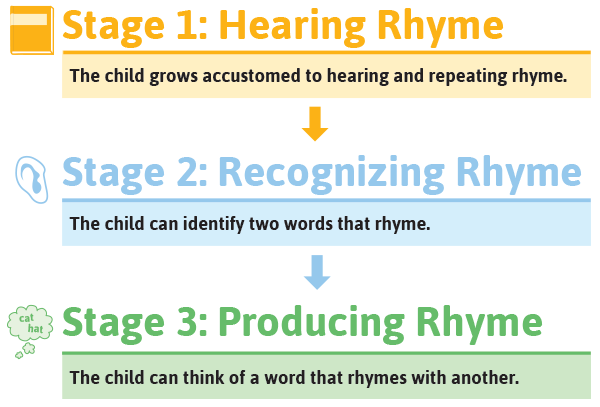
Hearing and recognizing rhyme are important skills your child must master before he can produce rhyme, so be sure to focus on these skills first. Modeling can be a great way to help your child hear rhyme.
Here’s an example of modeling: “Duck and truck rhyme! They both end with uck! Say it with me: uck-uck, duck, truck!”
But hearing rhyme is just the beginning. The activities below were designed to help you teach your child all three stages of rhyming!
5 Simple Ways to Teach Rhyming

Read rhyming picture books together.
There are hundreds of great rhyming books, and this Rhyming Picture Books Library List is a good place to start. As you read, occasionally point out words that rhyme. (“Oh, goat and boat rhyme! They sound the same at the end. Goat, boat.”)

Play “Get Out of the Wagon” with your child.
“Get Out of the Wagon” is a popular Stage 2 rhyming game. In this downloadable activity, three word cards—like rake, cake, and king—are placed in a wagon. The child determines which word doesn’t rhyme and tells it to “get out of the wagon.”

Share nursery rhymes with your child.
Nursery rhymes are conducive to reciting again and again. After your child knows the nursery rhymes, let him fill in the rhyming words to work on Stage 2. On this downloadable library list, you’ll find some wonderful nursery rhyme collections to enjoy together.

Play “What’s in My Bag?” with your child.
Once your child can successfully recognize rhymes, this activity will help him learn to produce rhymes (a Stage 3 skill). Just fill a bag with several common household items (here are some ideas) and you’re ready to play “What’s in My Bag?”

Play “Dinner Time” with the whole family.
For more advanced Stage 3 rhyming, download this fun “Dinner Time” game. But make sure to play “Dinner Time” with the whole family. It’s guaranteed to provide lots of giggles for kids and parents alike!

The Bottom Line on Teaching Rhyming to Your Child
- Rhyming is an important pre-reading skill that reaps dividends later on.
- The ability to rhyme occurs in three unique stages.
- Use books, games, and engaging activities to promote rhyming ability. We make it easy by including hands-on activities throughout our Pre-reading program, and we continue to reinforce rhyming throughout the All About Reading program.
It may not happen overnight, but with repeated exposure, your child will learn to rhyme. Most importantly, keep your rhyming practice fun and light—it shouldn’t feel like a “lesson” to a young child.
Is there a rhyming activity that your child enjoys? I’d love to hear about it in the comments below.
_________________________
Photo credit: Rachel Neumann


Comments
No comments yet. Our team reads and replies to every one.