


You may think that a “good memory” is something that your child either has or does not have. If that were the case, there would be little you could do to help your child become a better learner. But fortunately, this isn’t the case! You CAN help your child with her memory if you begin with an understanding of something I call the funnel concept.
What Is the Funnel Concept?
When explaining new concepts and teaching your child, it’s easy to assume that there is an unobstructed pipeline between you.
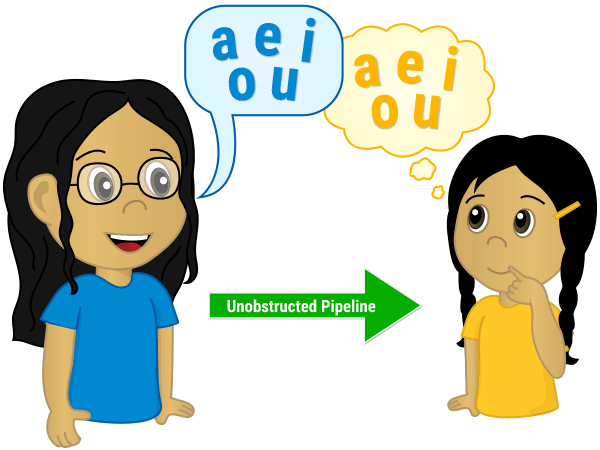
You explain something—like the concept that every word has a vowel—and you expect that your child will automatically file that nugget of information away and remember it in the future. You assume that since you taught it, your child will “get it” and your work will be done.
For many parents, this picture is far from reality. Too often, it seems that lessons go right over the child’s head … that nothing sticks.
Instead of picturing information going through an unobstructed pipeline, it’s more accurate to picture information passing through a funnel, like this:
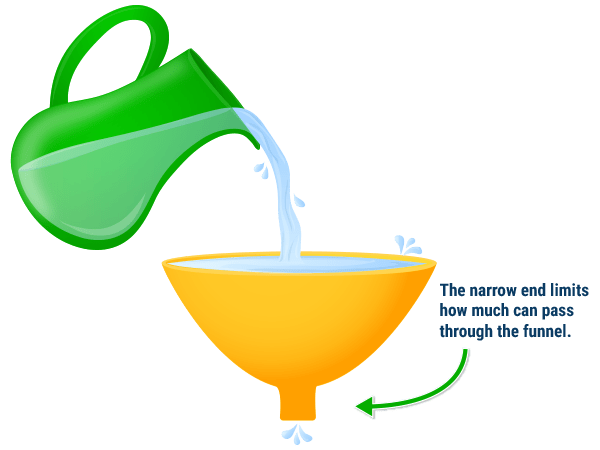
If you pour too much water into a funnel too quickly, what happens? The water overflows the top of the funnel, right?
A similar thing happens when we try to teach too much at a time. You can pour a lot of information in, but your child’s memory becomes overloaded and dumps the excess. You lose control over what actually makes it through the funnel.
This is what we call the funnel concept.
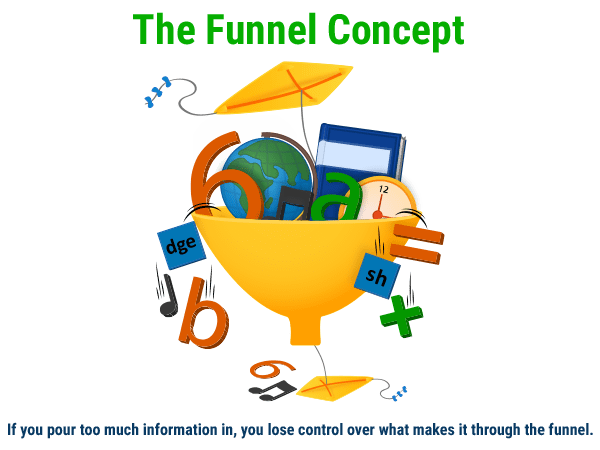
Now that you understand what the funnel concept is, let’s look at how to apply it to your teaching.
The Three Outcomes of Teaching
When you teach, there are three possible outcomes:
- No learning—when nothing at all sticks.
- Fragmented learning—when your child remembers some information, but just bits and pieces of the lesson.
- Meaningful learning—when your child remembers and is able to use or apply the information that you taught.
To reach the goal of meaningful learning, you need to avoid overwhelming your child’s funnel.
How to Avoid Overloading Your Child’s Funnel
To apply this concept in a practical way, let’s take a look at a common spelling test that focuses on the sound of long I.
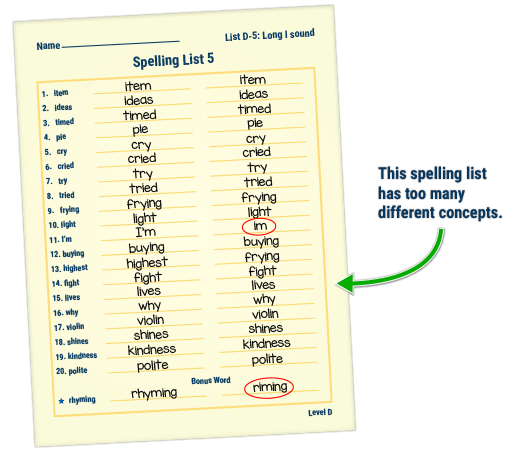
This list includes the following information:
- long I spelled Y, as in cry
- long I spelled with an I in an open syllable, as in item
- the letter I sometimes says its long sound when followed by two consonants, as in kindness
- long I spelled IGH, as in light
- long I spelled IE, as in pie
- the letter I can be long when it is followed by a consonant and Silent E, as in time
Getting confused yet? Has this list given you information overload? Wait—there’s even more!
This spelling list has two more curveballs:
- The word timed has suffix ED added, so the child must determine when to keep the Silent E and when to drop it.
- For the word cried, the child needs to know she must change the Y to an I before adding a suffix beginning with a vowel.
That’s a lot of information for just one spelling list!
Contrast that spelling list with this one:
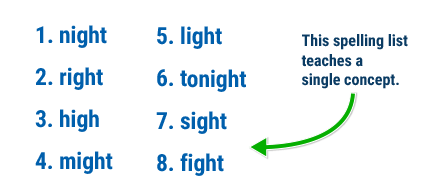
This is an example of the kind of list used in the All About Spelling program. Only one concept is introduced in this spelling list—long I spelled IGH. And that single concept is practiced using multisensory methods—auditory, visual, and kinesthetic.
Now ask yourself: Which spelling list is more likely to get through your child’s funnel and result in lasting learning? It may look better on paper to be covering twenty words at once, but the truth is that your child will achieve more permanent learning when you teach only the amount of information that she can process at one time.
So next time you’re teaching your child, think about teaching through a funnel and introduce just one main concept at a time. You’ll be pleased with the amount of meaningful learning that can occur!
Download This Free E-book to Learn More
Another great way to help your child learn faster is by using schemas. In this free e-book, “Help Your Child’s Memory,” you will discover…
- What schemas are and how they help improve memory
- Why information goes right over your child’s head … and what to do about it
- More about how the funnel concept can improve your teaching and result in long-term learning
- What simultaneous multisensory instruction is, and why it is such a powerful teaching method
Let me know if this post was helpful to you! Have you experienced “funnel overload” with your kids?


Comments
No comments yet. Our team reads and replies to every one.